
In the ever-evolving real estate market, understanding property value is crucial for homeowners, potential buyers, and investors alike. At the heart of this understanding lies the role of the Municipal Property Assessment Corporation (MPAC). As a pivotal entity in the Canadian real estate landscape, MPAC’s assessments significantly influence property taxes, market trends, and investment decisions. But how does MPAC assess property value? This article aims to demystify the process, offering a comprehensive view of the intricate methodology MPAC employs to evaluate properties.
From the bustling streets of Toronto to the serene landscapes of rural Ontario, property values vary dramatically, and MPAC’s assessments reflect these diversities. By examining the step-by-step process, understanding the factors influencing valuations, and exploring what these assessments mean for property owners, this article provides valuable insights into MPAC’s complex world. Whether you’re contesting an assessment or simply curious about how your property value is determined, this guide offers clarity and understanding in navigating the nuanced realm of property valuation.
Now that we have set the stage, we will delve into the detailed process of how MPAC assesses property values, unraveling the layers of this critical yet often misunderstood procedure.
Introduction to MPAC and Its Role in Property Assessment
The Municipal Property Assessment Corporation (MPAC) is a cornerstone in the Ontario property market, tasked with a mission that influences every property owner in the province. As an independent body established by the provincial government, MPAC’s primary role is to assess and classify all properties in Ontario for property tax purposes. This assessment is pivotal, as it directly impacts the property taxes paid by homeowners and businesses.
MPAC’s mission is to provide accurate and consistent property assessments. These assessments are used by municipalities to calculate property taxes, ensuring a fair distribution based on property values. The accuracy of MPAC’s assessments is vital, as it ensures equity among property owners, distributing the tax burden in a manner reflective of actual property values.
MPAC assesses more than five million properties across Ontario, a task that requires a deep understanding of the real estate market and a robust methodology. The properties assessed range from residential homes and commercial establishments to industrial sites and farmlands. This diversity necessitates a comprehensive approach to assessment, catering to the unique characteristics of each property type.

MPAC conducts property assessments every four years. During this period, property values may change due to market conditions, renovations, or changes in the property’s use. These assessments are not just numbers on paper; they have a tangible impact on homeowners and businesses, influencing their financial planning and investment decisions.
Beyond assessments, MPAC plays a crucial role in community development. Accurate assessments ensure that municipalities have the necessary funds to provide vital services like education, infrastructure, and emergency services. MPAC’s work, therefore, extends beyond mere valuation, contributing significantly to the quality of life in Ontario communities.
Understanding how the Municipal Property Assessment Corporation (MPAC) assesses property values is essential for homeowners and investors. This process is both intricate and systematic, ensuring accuracy and fairness in property valuation.
MPAC’s assessment process begins with comprehensive data collection. This includes gathering information on property size, age, location, and recent sales data of similar properties. MPAC also considers any changes to the property, like renovations or additions, which can significantly affect its value.
The next step involves a thorough market analysis. MPAC analysts study market trends and sales data in different regions to understand how these factors influence property values. This analysis helps in creating valuation models that accurately reflect the current market conditions.

Using the collected data and market analysis, MPAC develops valuation models for different property types. These models take into account various factors such as property location, size, condition, and comparable sales in the area. The goal is to estimate the property’s market value as accurately as possible.
Properties are not only assessed for their value but also classified based on their use, such as residential, commercial, or industrial. This classification is crucial as it affects the rate at which properties are taxed.
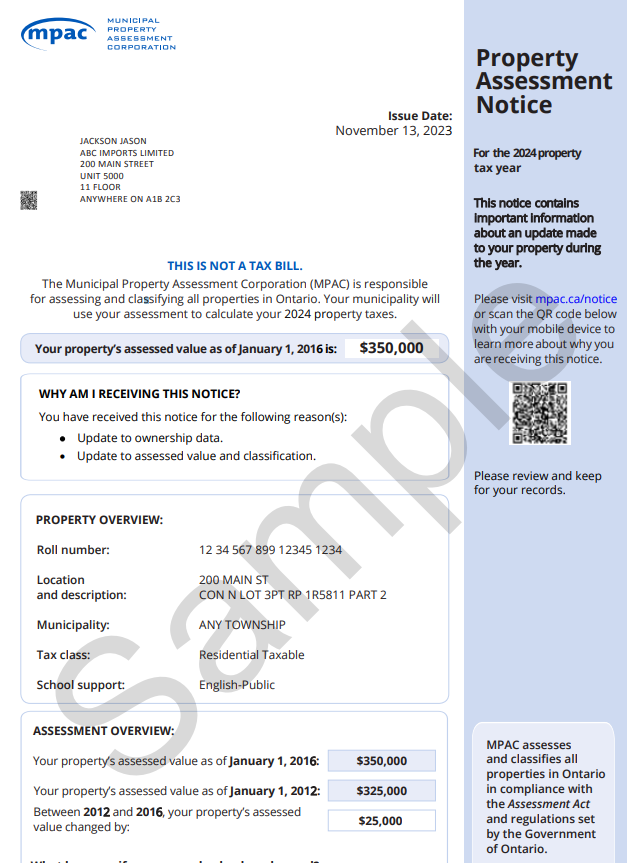
Once the value is determined, MPAC issues an Assessment Notice to the property owner. This notice details the assessed value of the property and its classification. Property owners are encouraged to review this notice carefully and contact MPAC if they have any questions or believe their assessment is inaccurate.
The process by which the Municipal Property Assessment Corporation (MPAC) determines property values is influenced by a multitude of factors. Understanding these can provide property owners with insights into their assessments.
One of the primary factors in property assessment is location. Properties in high-demand areas, such as urban centers or regions with robust amenities and services, tend to have higher valuations. Conversely, properties in more remote or less developed areas may be valued lower.

The size of the property, including the land and the building, plays a significant role in its valuation. Larger properties typically have higher assessments. Additionally, attributes such as the number of rooms, type of construction, and overall condition of the property are also considered.
Any improvements or renovations made to a property can significantly impact its assessed value. Upgrades that enhance a property’s functionality or aesthetic appeal, like a renovated kitchen or an added garage, can increase its market value.
The real estate market is dynamic, and market conditions at the time of assessment greatly influence property valuations. Factors like interest rates, housing demand, and economic trends can cause property values to fluctuate.
MPAC also performs a comparative analysis, evaluating similar properties in the area. This comparison helps ensure that properties are assessed fairly and consistently within the same region or neighborhood.
Receiving an assessment report from the Municipal Property Assessment Corporation (MPAC) is a significant event for any property owner. This report not only indicates the value of your property but also has implications for your property taxes.
The MPAC assessment report provides detailed information about your property’s assessed value and its classification. It’s important to understand that the assessed value may not always match the current market value, as it reflects the value at a specific valuation date set by MPAC.

Your property’s assessed value is a key factor in determining your property taxes. Municipalities use this value to calculate the amount of tax you owe. A higher assessment typically means higher property taxes, while a lower assessment can reduce your tax burden.
It’s crucial to differentiate between the assessed value and the market value of your property. The market value is what your property might sell for in the open market, which can fluctuate more frequently than the assessed value determined by MPAC.
If your property’s value has significantly changed since the last assessment, it’s worth reviewing the report to understand why. Changes could be due to market conditions, renovations, or errors in data. Understanding these changes can help you better manage your property and financial planning.
Accuracy in the assessment report is crucial. If you believe there is an error in your property’s assessment, MPAC provides a process for review and correction. Ensuring the accuracy of your property assessment can have long-term financial implications.
Enter your email address and we will send you a link to change your password.