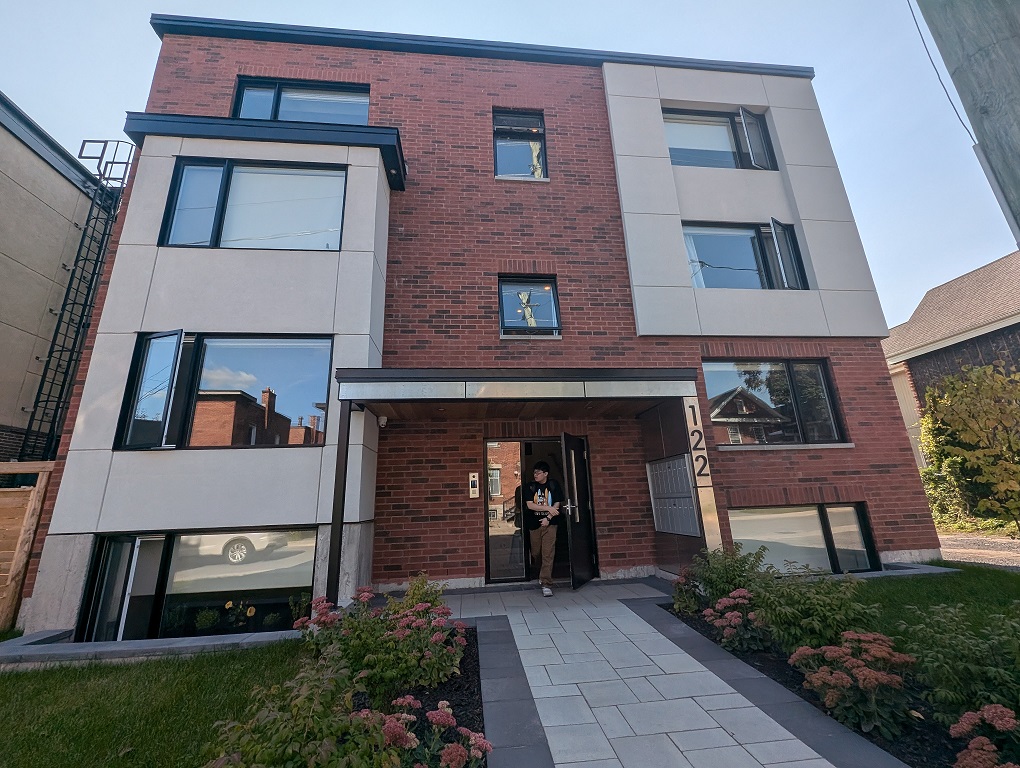
When an Ontario landlord needs a rental unit back for themselves or a close family member, the legal path runs through one form and one application: serve a Form N12, then file a Form L2 with the Landlord and Tenant Board if the tenant does not leave. The tenant does not have to move out on the notice alone. Only the Board can end the tenancy, and only the Court Enforcement Office (the sheriff) can carry out an eviction. An N12 is a no-fault ground, which means the paperwork and the landlord’s good faith carry the whole case.
One rule changed on September 21, 2026, and it changes the math before you serve anything. Under section 48.1(2) of the Residential Tenancies Act, 2006, a landlord who gives at least 120 days’ notice for their own use no longer has to pay the tenant compensation or offer another acceptable unit. Give 60 to 119 days and the old rule applies: one month’s rent, paid by the termination date. The Landlord and Tenant Board’s operational update of September 21, 2026 confirms the change, and the current N12 form (version 2026/10) prints it. Most guides online still describe compensation as always required. This one follows the Act as it stands in October 2026.
The N12 decision is now a trade: 60 days plus one month’s rent in compensation, or 120 days’ notice and no compensation at all.
What is an N12, and when can a landlord use it?
A Form N12 is a Notice to End a Tenancy Because the Landlord, a Purchaser or a Family Member Requires the Rental Unit. It covers two situations. Reason 1 is the landlord’s own use: you, or a family member the Act allows, genuinely need to live in the unit. Reason 2 is a purchaser’s own use: the property has been sold and the buyer, or their family member, genuinely needs to live in it.
The notice starts the process. It does not end the tenancy by itself. The current N12 form tells the tenant, in plain language, that they do not have to move out if they disagree, and that the landlord can apply to the Board, where a hearing will be scheduled and the tenant can explain why they disagree. If the tenant does move out by the termination date, the tenancy ends on that date. If they stay, your only route is the L2 application described below. Changing the locks, removing doors or shutting off services to force the issue is unlawful, however certain you are of your right to the unit.
RentSetGo Property Management runs own-use files for Ottawa landlords alongside arrears and renewal work, and the files that succeed share a pattern: the occupant is clearly eligible, the dates are counted properly, and nothing in the landlord’s recent conduct contradicts the stated intention to move in. The files that fail usually fail on one of those three points, not on the hearing itself. Our guide to Ontario landlord rights and responsibilities covers where the N12 sits among the other ways a tenancy can end.
Who has to move in for an N12 to work?
Section 48(1) of the Act lists exactly who may occupy the unit under a landlord’s own use notice. The unit must be required, in good faith, for residential occupation for at least one year by:
- the landlord;
- the landlord’s spouse;
- a child or parent of the landlord or of the landlord’s spouse; or
- a person who provides or will provide care services to the landlord, the landlord’s spouse, or a child or parent of either, provided the person receiving care lives in the same building, related group of buildings, mobile home park or land lease community as the unit.
Nobody else qualifies. The Board’s Interpretation Guideline 12 is explicit that an N12 cannot be used if the intended occupant is not on that list, and it cites a 2026 Ontario Court of Appeal decision (Miller Estate v. Arguelles, 2026 ONCA 518) confirming that siblings and the landlord’s estate do not qualify. Grandchildren, aunts, uncles and cousins are not on the list either. If the person you want to house is a sibling, the N12 is the wrong instrument, full stop.
The occupant has to be named on the notice, with their relationship to you. At least one intended occupant must be named; you can name more than one.
There is also a hard limit on who can give the notice. Under section 48(5), a landlord’s own use notice is only available where the unit is owned in whole or in part by an individual and the landlord is an individual. A corporation cannot give an N12 for its own use. The N12 instructions say it directly: “You can only give this notice if you are an individual; a corporation who owns a rental unit cannot give a notice of termination for this reason.” Guideline 12 reports a 2026 Divisional Court case where transferring a 1% interest from a corporation to its shareholders shortly before serving the notice was treated as an attempt to get around section 48(5). If your rental is held in a corporation, get legal advice before anyone serves anything. That is a structural problem, not a paperwork problem.
Finally, the occupation has to be real residential occupation. Guideline 12 states that part-time or occasional use does not count, and neither does leaving the unit empty. A plan to use the unit as an occasional Ottawa base while living elsewhere is not what section 48 protects.
How much notice does an N12 require?
At least 60 days, for both landlord’s own use and purchaser’s own use. Sections 48(2) and 49(3) set two conditions on the termination date: it must be at least 60 days after the notice is given, and it must be the day a period of the tenancy ends or, for a fixed-term lease, the end of the term. For a monthly tenancy, that means the last day of a rental month. You cannot pick a mid-month date because it suits a moving truck.
Count carefully. Do not include the day you give the notice. Then add delivery time for your service method: one business day for courier, five days for mail or Xpresspost. The N12 instructions give this worked example for a monthly tenancy: a notice handed to the tenant on August 1 can carry a termination date of September 30; the same notice mailed on August 1 cannot end the tenancy before October 31, because the five mailing days eat into the 60.
You may serve the notice by handing it to the tenant or an adult in the unit, leaving it in the mailbox or where mail is normally delivered, putting it under the door or through a mail slot, faxing it, or using courier or mail. One method is banned outright: you may not post the notice on the tenant’s door.
A wrong termination date is not a small error. Guideline 12 states that a notice with an incorrect termination date is defective, a defective notice cannot be amended after it has been given, and the Board cannot issue an order ending a tenancy based on one. You start over, with a new notice and a new clock. The same applies to a notice that does not name the tenants correctly, leaves the unit address incomplete, or goes unsigned and undated; the N12 checklist warns that your notice may be invalid and your application dismissed.
One right the tenant holds that landlords often miss: after receiving an N12, the tenant may end the tenancy on an earlier date of their choosing by giving you at least 10 days’ written notice on a Form N9. If your tenant lands a new place quickly, the tenancy can lawfully end well before your termination date, and your planning for the move-in should allow for it.
What compensation is owed, and how does the 120-day rule work?
The baseline rule is section 48.1(1): a landlord who gives an own-use notice must compensate the tenant an amount equal to one month’s rent, or offer the tenant another rental unit acceptable to the tenant. Section 49.1 imposes the same duty for purchaser’s own use. Section 55.1 sets the deadline: the compensation must be paid no later than the termination date in the notice. This is not a deposit to be settled after the tenant leaves. It is money owed by a fixed date, whether or not the tenant has moved out by then.
The consequences of missing that deadline are severe. Under section 83(4), the Board shall not issue an eviction order in an own-use proceeding until the landlord has complied with the compensation section. Guideline 12 adds that where compensation is unpaid at the hearing and the termination date has passed, the application will be dismissed unless exceptional circumstances exist. A rent waiver can count as compensation only if it is express, unambiguous, tied to a specific month, and clearly communicated to the tenant before the termination date. A handshake understanding will not do.
Since September 21, 2026, there is a second route. Section 48.1(2) removes the compensation duty entirely where three conditions are all met: the notice is given on or after September 21, 2026; the termination date is at least 120 days after the notice is given; and the termination date still lands on the last day of a rental period or the end of a fixed term. The current L2 form even carries a checkbox for it in Schedule B.
| Your choice | Notice given | Compensation owed |
|---|---|---|
| Standard route, landlord’s own use | 60 to 119 days | One month’s rent, paid by the termination date, or another acceptable unit offered |
| Long-notice route, landlord’s own use (notices given on or after Sept 21, 2026) | 120 days or more | None. No compensation and no duty to offer another unit (RTA s.48.1(2)) |
| Purchaser’s own use, any notice length | 60 days or more | One month’s rent, always. The waiver never applies to Reason 2 |
Two limits deserve emphasis. First, the waiver is for landlord’s own use only. Guideline 12 states that purchaser’s own use compensation is payable regardless of the length of notice provided. Secondary coverage that extends the waiver to purchasers is wrong. Second, a 120-day notice given before September 21, 2026 does not qualify; the notice itself must be given on or after that date.
Practically, the trade is time for money. If your parent is moving to Ottawa on a flexible date, the 120-day route saves a month’s rent and gives the tenant a fair runway to find a new home. If the unit is needed for a fixed event, a school start, a job relocation, a closing, the 60-day route with compensation paid on time is usually worth the month’s rent. What you cannot do is split the difference: 90 days’ notice still owes full compensation.
How is purchaser’s own use different?
Purchaser’s own use runs under section 49, and the differences from section 48 matter. The selling landlord gives the N12 on behalf of the purchaser, and only after an agreement of purchase and sale has been entered into. There is no notice before a deal exists.
The eligible occupants mirror the landlord list: the purchaser, the purchaser’s spouse, a child or parent of the purchaser or the purchaser’s spouse, or a caregiver on the same conditions. But section 49 adds a size condition that section 48 does not have: it applies to a residential complex containing no more than three residential units. Guideline 12 states that an application concerning a complex with more than three units will be dismissed. The one exception is a condominium unit: a landlord who owns a condo unit may give the notice for that unit regardless of how many units are in the complex.
Two further contrasts. Compensation is always owed in a purchaser case, and section 49.1(2) keeps that obligation on the landlord who gave the notice; it does not become the purchaser’s obligation, whatever the purchase agreement says between the parties. And the Act does not impose the “at least one year” occupation wording on purchaser’s own use: section 49 and the Reason 2 declaration in the L2 omit it, while section 48 includes it. A buyer still has to require the unit in good faith, and re-renting it right after closing is exactly the fact pattern that draws a bad-faith application, but the one-year statutory language itself applies to landlord’s own use.
If you are buying a tenanted property in Ottawa and counting on vacant possession through an N12, check the unit count, the occupant’s eligibility and the closing timeline before the agreement goes firm. Our landlord legal compliance guide covers the surrounding obligations that follow a landlord through a sale.
What does the full N12 and L2 process look like, step by step?
| Step | What happens | Timing |
|---|---|---|
| 1. Choose the occupant and the route | Confirm the person is on the section 48 list, decide 60 days plus compensation or 120 days without, and set the termination date on the last day of a rental period | Before anything is served |
| 2. Serve the N12 | Give the current N12 (2026/10) by a permitted method, then complete a Certificate of Service recording how and when it was given | Day one of the clock |
| 3. Pay compensation, if owed | One month’s rent to the tenant, or another acceptable unit offered, unless the 120-day waiver applies | No later than the termination date |
| 4. File the L2, if the tenant stays | Apply to the Board to end the tenancy and evict, with the full document package listed in the next section | Any time after the N12 is given, and no later than 30 days after the termination date |
| 5. Attend the hearing | You prove good faith on a balance of probabilities; the tenant can dispute the notice, the occupant’s eligibility or your intention | Tribunals Ontario’s published timelines (last updated November 27, 2024) put most application types other than L1/L9 at a 5 to 7 month scheduling window; there is no L2-specific published figure |
| 6. Order and enforcement | If the Board orders the tenancy ended, the order sets the date. Only the Court Enforcement Office can enforce it, for a fee | An order cannot require the tenant out before the termination date in the notice |
Two timing points from that table deserve a second look. First, you do not have to wait for the termination date to file the L2. Section 71 lets you file as soon as the N12 has been given, and filing early is how landlords keep the hearing wait from starting only after the tenant was already supposed to leave. Second, the deadline at the other end is unforgiving: section 69(2) requires the L2 within 30 days after the termination date, and Guideline 12 confirms a late application will be dismissed. The tenant must also still be in possession when you file.
What has to go in the L2 application?
The L2 (current version 2026/09) costs $201 to file, or $186 through the Tribunals Ontario Portal, and the Board will not process it without the fee. A fee waiver request exists for landlords who qualify. The L2 instructions are blunt about completeness: your application will be refused if any required item is missing. The package is:
- the completed L2 and the filing fee;
- a copy of the N12 you gave the tenant;
- a copy of the Certificate of Service for the N12;
- Schedule B, which covers the compensation questions (including the 120-day waiver checkbox) and a chart of previous notices; and
- a declaration, or a sworn affidavit, from the person who will move in, stating that they require the unit in good faith for their own use (for landlord’s own use, for at least one year).
Treat the declaration as part of the filing, not a follow-up. Section 71.1 requires the affidavit to be filed at the same time as the application, and the Board is to refuse an application filed without it. Schedule B’s instruction is the same: “The LTB will not accept your application without the declaration.” File it with the L2.
The previous-notices chart is the item landlords most often get wrong. You must disclose every N12 and N13 you have given in the past two years, for any unit, with the date given, the unit address, the intended occupant or activity, and the Board file number if an application was filed. Guideline 12, again citing Miller Estate v. Arguelles, states that if non-disclosure surfaces at the hearing, the application must be dismissed and cannot be fixed by amendment. If you have served an own-use notice before, say so on the form. The Board can consider that history in any event; hiding it converts a factor into a fatal defect.
One cost expectation to set now: on own-use applications, which are no-fault grounds, it is the Board’s usual practice not to order the tenant to pay your filing fee even when you succeed. Budget the fee as a cost of the process.
What defeats an N12 application?
Most failed own-use files fail on a short list of avoidable problems:
- A defective notice. Wrong termination date, too-short notice because delivery days were miscounted, unnamed or misnamed parties, an incomplete unit address, a missing signature or date. A defective notice cannot be amended; the application built on it cannot succeed.
- The wrong occupant or the wrong landlord. An occupant outside the statutory list, or a corporate landlord attempting a section 48 notice.
- Compensation unpaid or late. No eviction order until the duty is met, and dismissal is the expected result once the termination date has passed.
- A missing declaration or Certificate of Service in the L2 package, or an L2 filed more than 30 days after the termination date.
- Undisclosed prior N12 or N13 notices from the past two years.
- Good faith not proven. The test is genuine intent, assessed on all the evidence, including your conduct before and after service. A landlord who listed the unit for sale, advertised a higher rent, or told the tenant the real goal was a rent increase has handed the tenant their defence.
Even a proven case can still be refused or delayed under section 83. The Board must consider relief from eviction in every case, and it shall refuse eviction where it is satisfied that the landlord is in serious breach of the Act or a material covenant, that the application was brought because the tenant complained to a government authority about health, safety, housing or maintenance standards, because the tenant tried to enforce legal rights, because the tenant belongs to or is organizing a tenants’ association, or because the unit is occupied by children and that occupation is not overcrowding. An own-use notice served two weeks after a tenant files a maintenance complaint will be read in that light. Sequence matters, and a clean maintenance record is part of an own-use file, not a separate topic. Our N4 to LTB timeline guide shows how the same relief provision shapes arrears cases.
What happens after the tenant leaves?
For landlord’s own use, the obligation runs for at least one year: the named person must actually take up residential occupation of the unit for that period. Since September 21, 2026, there is also a deadline at the front end. The intended occupant must normally move in within 60 days, counted from the termination date if the tenant left by then, or from the date the tenant actually vacated if they left later. If nobody on the notice has moved in within that period, bad faith is presumed, and the landlord has to rebut the presumption at a hearing.
The tenant’s remedy is a Form T5, a bad-faith application under section 57, filed no later than one year after the tenant vacated. Bad faith is also presumed where, between service of the notice and one year after the tenant left, the landlord advertised the unit for rent, re-rented it to someone else, advertised the unit or building for sale, demolished it, or took steps to convert it. A finding at the original L2 hearing that you acted in good faith does not block a later T5; section 57(4) lets the Board find bad faith despite the earlier finding.
The money at stake on a T5 is real. The Board can order payment of all or part of the tenant’s rent increase at their new home for a one-year period, general compensation of up to 12 months of the last rent charged (payable even if the tenant spent nothing), reasonable moving and storage expenses, a rent abatement, and an administrative fine. The most the Board can order on a T5 claim overall is $50,000; larger claims belong in Superior Court. In plain terms, using an N12 to clear a unit for a higher-paying tenant risks a five-figure order plus a fine, on top of the year the unit was supposed to be occupied by family. If the plan for the unit might change, that is a conversation to have before the notice is served, not after.
What this guide can’t tell you
Good faith is decided on your facts, not on the form. Two landlords can serve identical notices and get opposite results because their histories differ: a prior own-use notice, a recent rent dispute, a listing agreement signed the same month. No article can assess that, and the Board weighs conduct that never appears in the paperwork. The Act also carries exceptions this guide does not work through, including rules for tenancies in converted condominiums, units sold to a sitting tenant after a severance, and equity co-ops (sections 51, 56 and 72(2) are the starting points). If any of those touch your property, the general process above may not apply to you at all.
The hearing timing used here is the newest Tribunals Ontario has published, and it is dated November 27, 2024. It is a general figure for most application types, not an L2 promise, and it predates the September 2026 changes. Treat it as a planning range, and expect the actual date to be set by the Board’s scheduling, not by anyone’s estimate, including ours.
Can you run an N12 yourself?
Often, yes. If you own the unit personally, the occupant is squarely on the section 48 list, you have given no own-use or demolition notices in the past two years, your maintenance record is clean, and your dates are flexible, the forms are public and the instructions are genuinely thorough. A careful landlord with a calendar and a checklist can run that file, and the 120-day route in particular rewards landlords who are not in a hurry.
Hand the file to a licensed paralegal, or to a management company that works with one, when any of the following are in play: a purchaser’s own use tied to a closing date; ownership through a corporation; a tenant who has already mentioned bad faith, a recent complaint to the City or a maintenance dispute; prior N12 or N13 notices in the two-year window; or a move-in date that real life depends on, such as a parent leaving a sold home. In those files the cost of a dismissed application is not the $201 fee. It is the months lost and the second proceeding fought on a worse record. RentSetGo’s full service property management includes exactly this kind of file handling for Ottawa landlords, working with the landlord’s paralegal where a hearing is contested.
The Bottom Line
An N12 works when the occupant is eligible, the notice is counted and served correctly, the compensation question is answered on time, and the landlord’s conduct matches the story the form tells. The September 21, 2026 change gives landlords a genuine choice that did not exist before: trade a longer runway, 120 days, for a clean exemption from compensation, or move in 60 days and pay one month’s rent by the termination date. Purchasers never get that choice; their compensation is always due. Decide the route before you serve, disclose your notice history on the L2, file the occupant’s declaration with the application, and treat the year after the tenant leaves as part of the obligation, because the Act does.
Frequently Asked Questions
How much notice does an N12 require?
At least 60 days. The termination date must be at least 60 days after the notice is given, and it must be the last day of a rental period or, for a fixed-term lease, the end of the term. Add delivery time on top: one business day for courier, five days for mail.
Do I always have to pay compensation with an N12?
No. For landlord’s own use notices given on or after September 21, 2026 with a termination date at least 120 days out, section 48.1(2) removes the duty to pay compensation or offer another unit. At 60 to 119 days you owe one month’s rent by the termination date. For purchaser’s own use, compensation is always owed.
Can a corporation give an N12?
No. Section 48(5) allows a landlord’s own use notice only where the landlord is an individual and the unit is owned in whole or in part by an individual. A corporation cannot give an N12 for its own use.
Can I give an N12 so my sibling can move in?
No. The Act allows the landlord, their spouse, a child or parent of the landlord or their spouse, and a caregiver in defined circumstances. Siblings, grandchildren and other relatives are not eligible, and the Board’s Guideline 12 confirms an N12 cannot be used for them.
Does the tenant have to move out on the termination date?
Not on the notice alone. If the tenant disagrees, they can stay until the Landlord and Tenant Board orders the tenancy ended after a hearing. Only the Court Enforcement Office can enforce an eviction order.
When can I file the L2, and what does it cost?
You can file as soon as the N12 has been given, and no later than 30 days after the termination date. The fee is $201, or $186 through the Tribunals Ontario Portal. The occupant’s signed declaration has to be filed with the application.
What happens if I re-rent the unit after an own-use eviction?
You risk a bad-faith T5 application, which the former tenant can file within one year of vacating. Re-renting, advertising the unit, or listing the property for sale within that year creates a presumption of bad faith, and the Board can order a year of rent differential, up to 12 months of the last rent as general compensation, moving expenses and a fine.
Taking a unit back for your own family?
RentSetGo Property Management runs own-use files for Ottawa landlords from the first decision to the last deadline: confirming the occupant is eligible under section 48, choosing between the 60-day route with compensation and the 120-day route without, serving the N12 with a proper Certificate of Service, and building the L2 package with the occupant’s declaration and your two-year notice history disclosed.
Tell us who is moving in and the date you need the unit, and we will map your notice date, your compensation position and your filing checklist, in writing.
613-800-2523 · info@rentsetgo.ca
BOOK A CALL
GET A FREE MANAGEMENT QUOTE
Own-use, placement and full management support for landlords across Ottawa.
Related Reading
- Tenant Not Paying Rent in Ontario? The N4 to LTB Timeline in 2026
- Ontario landlord rights and responsibilities
- Landlord legal compliance in Ontario
- Tribunals Ontario: Form N12 instructions
- Residential Tenancies Act, 2006 (e-Laws)
This article is general information about Ontario’s N12 process, not legal advice. It was prepared on October 21, 2026, from the Residential Tenancies Act, 2006 (e-Laws consolidation current from September 21, 2026), Tribunals Ontario’s current Form N12 (2026/10), Form L2 (2026/09), their instructions, Interpretation Guideline 12, and the Board’s operational update of September 21, 2026. The hearing timing cited is Tribunals Ontario’s published figure last updated November 27, 2024 and is not specific to L2 applications. Rules, forms and fees change; confirm the current versions before you serve or file, and consult a licensed paralegal or lawyer for advice about a specific tenancy.