
Start with the part nobody likes. In Ontario, there is no damage deposit to keep. A landlord who finds a wrecked blind or a burned countertop after move-out cannot hold back money that was never collected, and the last month’s rent deposit can only be applied to rent.
What a landlord can recover is narrower, and it is provable or it is nothing. Under the Residential Tenancies Act, 2006, a tenant pays for undue damage caused wilfully or negligently by the tenant, by an occupant, or by a guest. Ordinary wear from living in the home is the landlord’s cost. The gap between those two categories is where most move-out arguments live, and landlords lose real money inside that gap every year.
Wear and tear is what normal living does to a home over time, and section 20 of the Residential Tenancies Act, 2006 puts repair and maintenance on the landlord. Undue damage is harm beyond that normal use, and section 34 makes the tenant responsible for it.
A wall tells the story well. Paint that has dulled after a four-year tenancy is wear. A hole punched through the drywall is undue damage, and so is paint applied without permission in a colour that now needs three coats to cover. Same wall, opposite answers, because the cause differs.
| Item | Usual wear, landlord’s cost | Undue damage, tenant’s responsibility |
|---|---|---|
| Walls and paint | Faded paint, small nail holes from pictures, light scuffs at door height | Holes that need patching. Crayon or marker across a wall. Unapproved paint that has to be covered. |
| Flooring | Carpet worn flat in the hallway path, faint sun fading near windows | Pet urine soaked into underpad, burns, torn vinyl, hardwood gouged by dragged furniture |
| Appliances | A fridge seal that ages out, a stove element that fails after years of normal use | Shelves cracked by overloading, a glass cooktop smashed by a dropped pot |
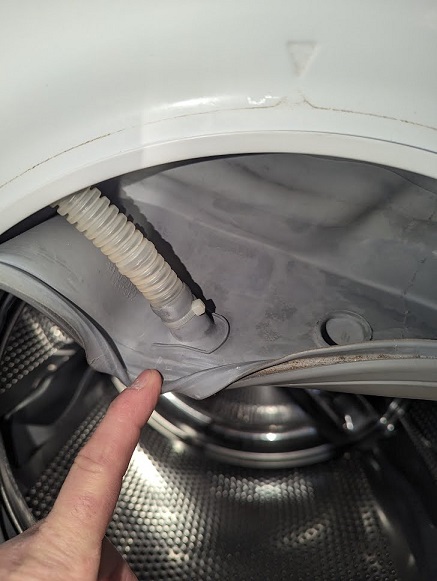
| Plumbing | Washer hoses and tap washers that reach end of life, slow drains in an older home | Pipes blocked by grease poured down the sink, a toilet cracked by standing on it |
| Blinds and window coverings | Slats that yellow in the sun, a cord that wears thin over years | Slats snapped off. Blinds pulled off their mounts. Coverings removed and never returned. |
| Doors and locks | Loose handles tightened at turnover, strike plates that need adjustment | A door kicked in, locks changed without the landlord’s consent and never restored |
Age matters inside every row of that table. A nine-year-old carpet with a stain is not worth what a one-year-old carpet was worth, and the Landlord and Tenant Board looks at the age and the remaining useful life of the item when it sets an amount. Claiming a full replacement price for a worn-out item is the fastest way to lose credibility on the rest of the claim.
Wear is the rent you already collected doing its job. Undue damage is a specific act, with a date on it and a photo to prove it.
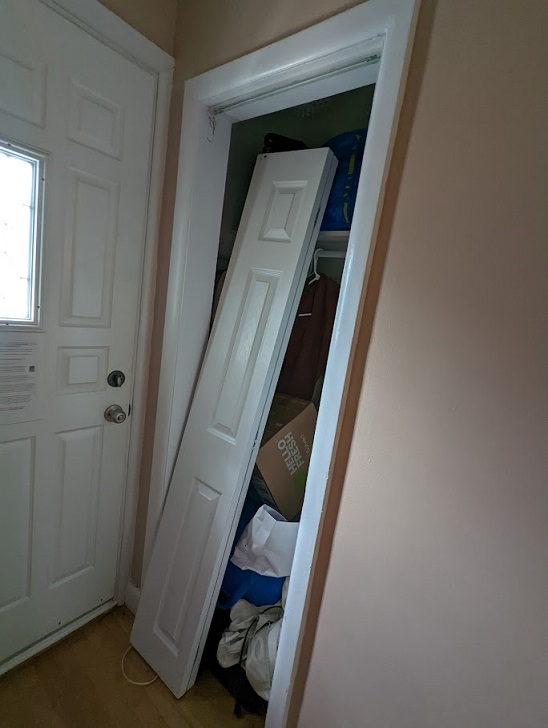
No. There is no deposit to keep, because collecting one was never allowed. The only deposit the Residential Tenancies Act, 2006 permits is a rent deposit for the last rental period, and it can be applied to rent alone.
Recovery after move-out runs on a form, not on a holdback. The landlord asks the former tenant to pay, in writing, with the move-out photos and the repair invoice attached. If the former tenant refuses or does not answer, the landlord applies to the Landlord and Tenant Board on Form L10, the application to collect money a former tenant owes.
The Landlord and Tenant Board’s own Form L10 instructions set the frame. The tenant must have moved out on or after September 1, 2021. The application cannot be filed more than one year after the date the tenant moved out. The most the Board can order on that claim is $50,000, so a larger claim belongs in court instead. The Board also asks for the former tenant’s current address if you know it, which is a practical reason to collect forwarding contact details on the move-out paperwork itself.
No outcome is promised on any of this. The Board decides on the evidence in front of it, two similar-looking claims can land differently, and a landlord who cannot show the condition of the unit at move-in starts the hearing behind.
Deal with it during the tenancy, in writing, while the damage is fresh and the person who caused it is still in the unit. A repair arranged and paid for in March is a maintenance file. In November, it is a claim.
The formal route is Form N5, the notice used for damage or overcrowding. On a first Form N5 for damage, the termination date sits at least 20 days after the notice is given, and the tenant has 7 days to repair the damage or pay the estimated cost of repairing it. If the tenant does that inside those 7 days, the notice is void. If the tenant does nothing, the landlord can apply to the Board on Form L2. The notice must state the repair cost clearly, because the tenant cannot void a notice that never says what fixing the problem costs.
Two limits are worth stating plainly. A landlord cannot change the locks, shut off a service, or walk in without proper notice because damage has happened, and the repair conversation stays a repair conversation even when it gets tense. Entry for an inspection still needs at least 24 hours written notice, between 8 a.m. and 8 p.m.
Every damage claim reduces to a before picture and an after picture, taken of the same rooms from the same spots. The two sets can sit years apart. The move-in condition report is the before picture, signed. Without it, the landlord is asking the Board to accept a memory of how the unit looked, and memories lose to dated photographs.
A report that holds up does a few unglamorous things well:
At RentSetGo Property Management, the move-out walkthrough is booked against that same report, same rooms, same angles. Our service page shows how it fits inside full property management in Ottawa, from the first walkthrough to the final invoice. It is dull work. It also decides claims.
Pick finishes that forgive. Washable paint in a standard colour you can buy again in five years, hard-surface flooring in the entry, and stove drip pans replaced at every turnover all cost less than one disputed carpet claim.
Then look while the tenancy is young. A routine inspection in the first season catches the slow leak under the kitchen sink while it is still a washer, and winterizing your Ottawa rental before the cold arrives stops the burst pipe that wrecks a floor and a ceiling. It can wreck the home below as well. Inspections need that same 24 hours written notice, and the visit should end with a short written summary the tenant has seen.
Screening plays a quieter role than most landlords expect. A consistent application process sets the tone that the home is documented and checked, and our guide on how to screen tenants in Ottawa covers what can lawfully be asked. It does not predict who will damage a home. Nothing does. It does make the documentation habit start on day one. Tenants who know a signed report exists know the move-out walkthrough will be compared against it. That changes behaviour. It also helps reduce tenant turnover over time.
Plenty of landlords can, and plenty do, year after year, without any help at all. If you own one unit near your own home, you have the time to attend both walkthroughs in person, and the amounts in dispute are a few hundred dollars, the Form L10 route is paperwork an owner can run without help. The Board publishes its forms and instructions free of charge.
The case for handing it off is distance and deadlines. An owner in another province cannot photograph a move-out on a Tuesday afternoon, or stand in a hearing room across town on a Thursday morning either. The one-year clock on a former-tenant claim does not pause while you find a contractor quote, and a claim filed late is a claim that never gets heard. Owners with several doors run into volume instead. Each turnover produces a report of its own, an invoice file of its own, and a fresh decision about what is worth pursuing at all.
Ontario gives a landlord a real route to recover for undue damage, and it is a documented route, not a financial one. No deposit. No holdback. The landlord who gets paid is the landlord who can show a signed move-in report, dated photos at both ends of the tenancy, and an invoice that matches the damage in those photos, filed inside one year of the move-out date. Build that file at the start of every tenancy and the end of it stops being an argument about whose memory is better.
The full picture of your duties sits in our guide to landlord rights and responsibilities in Ontario. Owners across Ottawa, from Sandy Hill property management files to suburban houses, run into the same wear-versus-damage line sooner or later. It is cheaper to draw it before the first tenant moves in.
No. Ontario law does not allow a damage or security deposit. The only deposit a landlord can collect is a rent deposit for the last rental period, capped at one month’s rent, plus a refundable key deposit that cannot exceed the cost of replacing the keys. Money for damage has to be claimed, not held back.
The landlord pays, in the usual case, out of the turnover budget. Repainting after normal living is a turnover cost. Faded or tired paint at the end of a multi-year tenancy is wear. Repainting becomes a claim when the tenant caused undue damage, such as unapproved paint that needs extra coats to cover or markings that go beyond ordinary scuffs. The age of the paint job and your move-in photos decide which side of that line a unit sits on.
The Landlord and Tenant Board route is Form L10, and you have one year from the date the tenant moved out to file it. The route only covers tenants who moved out on or after September 1, 2021. The most the Board can order on that application is $50,000, and that ceiling is written into the Board’s own instructions for the form. Miss the year and the Board route is gone, whatever the damage looks like.
Serve Form N5. On a first notice for damage, the tenant gets 7 days to repair the damage or pay the estimated cost of the repair, and the notice is void if the tenant does so. If the tenant does not correct it, the landlord can apply to the Landlord and Tenant Board on Form L2. The notice has to spell out the repair cost, so get a real estimate before serving it.
Photos are not a filing requirement. They are the evidence. A claim supported by a signed move-in condition report and dated photos from both walkthroughs gives the Board something concrete to weigh against the tenant’s account. A claim built on recollection gives the Board very little, and those claims fare badly.
Dealing with damage at a move-out?
We photograph and document the unit’s condition at move-in, inspect it the same way at move-out, and separate normal wear from undue damage with the report to back it up. When the damage is real, we build the file the Board expects and pursue recovery through the proper form, instead of a deposit that does not exist in Ontario.
Tell us what your last move-out looked like and we will walk you through what would have been recoverable, and what paperwork decides it.
613-800-2523 · info@rentsetgo.ca
BOOK A CALL GET A FREE MANAGEMENT QUOTE
Managing rentals across Ottawa, with move-in and move-out inspections documented on every tenancy.
This article is general information about rental damage in Ontario, checked against the Residential Tenancies Act (2006) plus the Landlord and Tenant Board’s Form L10 and Form N5 materials, both read on October 18, 2026. It is not legal advice. Board practice and filing rules change, and the outcome of any application depends on the evidence at the hearing. For a live dispute, talk to a licensed paralegal or a lawyer who practises landlord and tenant law in Ontario. RentSetGo Property Management does not guarantee any Board outcome.
Enter your email address and we will send you a link to change your password.