
Capital cost allowance (CCA) is the Canada Revenue Agency’s depreciation deduction for a rental property. You claim a percentage of the building cost each year on Form T776, and the claim reduces the rental income you pay tax on.
Three rules decide whether the claim helps you. Land is never depreciable, so only the building portion of your purchase price counts. The claim is optional every year. And CCA cannot create a rental loss or increase one, which is the rule that cuts most small landlords’ claims down to size.
CCA is the tax version of depreciation. A building wears out on paper over decades, and the CRA lets you deduct a set percentage of its remaining capital cost each year instead of deducting the purchase price up front.
The CRA’s Guide T4036, Rental Income, sets out the classes and the calculation. Each property sits in a class with its own rate, and you claim the rate against the undepreciated capital cost (UCC), which is the capital cost left after the CCA you have claimed in earlier years. Because the balance drops every year you claim, the deduction shrinks over time. Accountants call this the declining balance method.
RentSetGo Property Management sees the same mistake every tax season. An owner claims CCA on the full purchase price and leaves the land in the claim. The return cannot go in until the numbers are rebuilt.
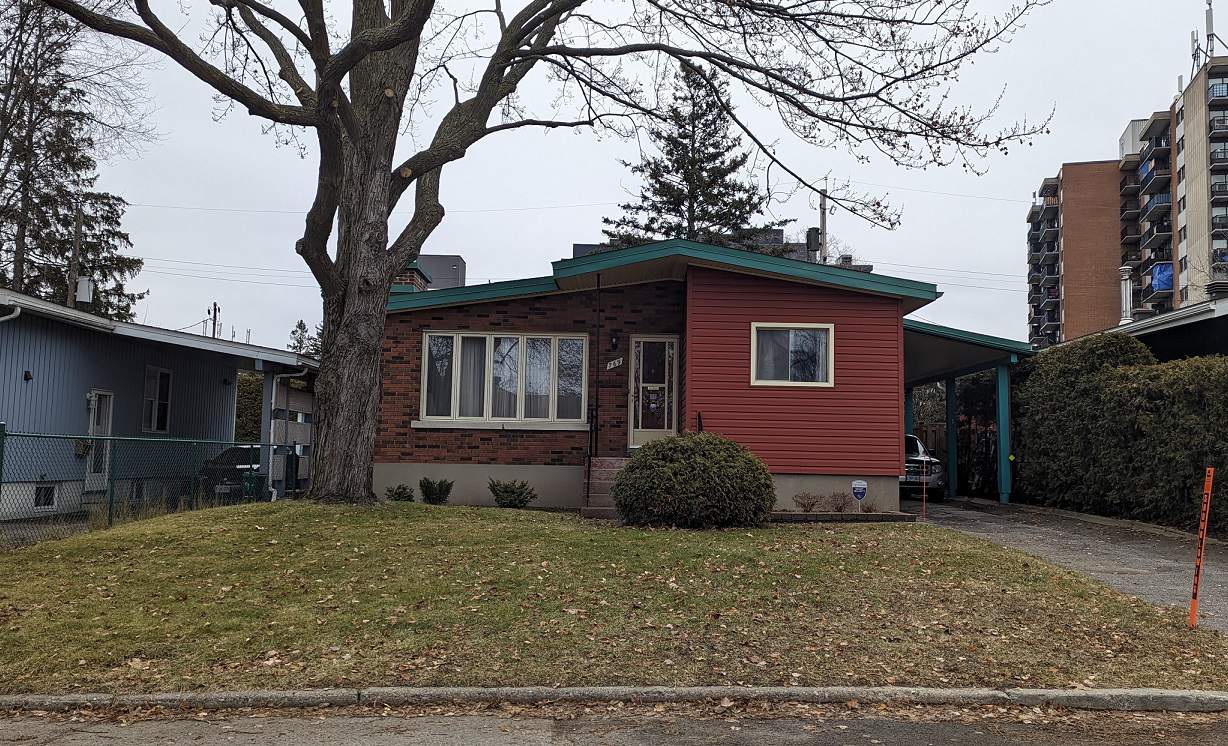
You claim CCA on the building only. Land does not wear out, and the CRA does not allow a deduction for it, so the purchase price has to be split between land and building before any calculation starts.
The split needs support. Owners rely on the municipal assessment split or on an appraisal. An allocation written into the purchase documents works too. Keep whatever you relied on. A split you cannot explain is a split the CRA can replace with its own.
Capital work you do later goes into a class as well. A new roof or an addition is added to the building cost. Furniture and appliances sit in their own classes at their own rates, and the rate for each one is set out in the CRA classes list in Guide T4036.
One timing rule sits underneath all of this. CCA starts when the property is available for use, which for a rental usually means it is ready to be rented, and the half-year rule below limits the first claim.

Most rental buildings are Class 1, at a rate of 4% on the declining balance. In the year you buy, the half-year rule limits the claim to one-half of the net additions to the class, so the first-year claim is smaller than owners expect.
Here is a worked example. You buy a rental for $850,000, and the supported split puts $250,000 on the land.
| Step | Amount |
|---|---|
| Purchase price | $850,000 |
| Land portion (never depreciable) | $250,000 |
| Building cost (Class 1) | $600,000 |
| Year 1 base after the half-year rule | $300,000 |
| Year 1 maximum CCA, at 4% | $12,000 |
That $12,000 is a ceiling, not an entitlement. The rental-loss rule in the next section decides how much of it you can use.
Year two has no half-year limit. If you claimed the full $12,000, your UCC opens at $588,000 and the maximum claim is $23,520, again subject to the loss rule. Skip a year and nothing is lost, because an amount you do not claim stays in the UCC for later years.
The 4% rate is the easy part. The rental-loss limit decides what you can actually claim.
The CRA calculates this limit across all of your rental properties combined. CCA can bring your total net rental income down to zero. It cannot take it below zero.
Take the $600,000 building above. The Class 1 calculation allows $12,000 in year one, but suppose your rental income for the year, after every other expense, is $3,000. Your claim is capped at $3,000. The other $9,000 of room is not wasted and it does not carry forward as a claim, because the unclaimed amount simply stays in the UCC balance.
This cuts both ways. A landlord with a loss before CCA gets no benefit from claiming that year. A landlord with several properties pools the income from all of them, so one strong property can give the whole portfolio room to claim.
It also means the owners who gain the least from CCA are often the ones who ask about it first. A new landlord with one property, a large mortgage and a thin margin has very little income for CCA to shelter. Our first-time landlord guide walks through the expenses that come before CCA in that first year.
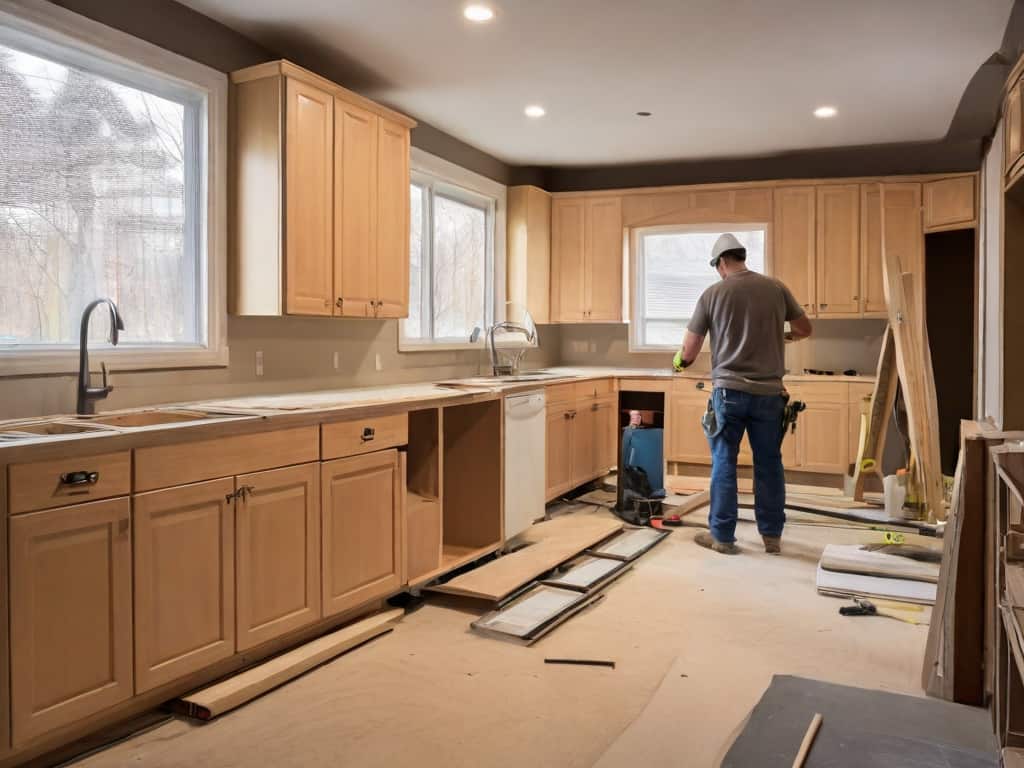
Only capital costs go into a CCA class. Work that restores a property to its original condition is a current expense, deducted in full in the year you pay it, and work that improves the property or extends its life is capital.
| Current expense (deduct this year) | Capital expense (goes into a CCA class) |
|---|---|
| Repainting a unit between tenants | Putting on a new roof |
| Repairing a furnace so it heats again | Installing a second bathroom |
| Fixing a leaking pipe | Converting a basement into a separate rental unit |
| Replacing a broken lock with an equivalent lock | Building an addition |
The line is not always where owners put it. Replacing one appliance is capital, because the new appliance is a separate asset in its own class, while a repair part for the old one is current. Management fees are current, and our guide to what property management costs in Ottawa explains where those fees sit in an owner’s statement.
When a job is large, ask the question before the work starts, not after the invoice is paid. Reclassifying a paid repair later is a harder conversation.

Run the loss limit first. If your net rental income before CCA is a few thousand dollars, that figure is your maximum claim no matter what the class calculation says, and the decision takes about a minute.
Your room to claim is the pooled net rental income from every property, so a renovated unit throwing off cash can shelter income while a newer purchase is still in its low-income years. Track the UCC for each property separately, though. The pool is shared for the loss limit, and each building keeps its own balance for the day it sells.
The Ottawa part of the job is records, not rates. Your accountant works from the assessment split and your invoices, and the year-end statement is what ties the rent figures to the CCA balance for the year. Owners across the city hand over the same package every spring. The landlords on our Orleans property management page do it too.
Do not claim CCA on a home you lived in until you have read this section and taken advice. The CRA’s principal residence rules tie the exemption to a simple condition: no CCA claimed on the property.
Start with part of a home. If you rent out part of the home you live in, the CRA says it will consider the whole property to have kept its principal residence character only if all of these hold: the income use is ancillary to your use of the home as a residence, you made no structural change to the property, and no CCA is claimed on the property. Miss one condition and the CRA usually treats the rented part as having changed use, which means a deemed sale of that part at fair market value.
The whole-home case is sharper. If you move out and rent the entire home, you can elect under subsection 45(2) of the Income Tax Act to keep designating it as your principal residence for up to four more years, and the CRA states plainly that if you make this election, you cannot claim CCA on the property. One CCA claim and the election is gone.
Coming back is restricted too. The subsection 45(3) election, which defers the deemed sale when a rental becomes your home again, is not available if CCA was deducted on the property for a tax year after 1984.

None of this means renting out your old home is a bad move. It means the CCA decision comes first, before the first return is filed, and it is a decision to make with an accountant who has the full picture. The deduction at stake in year one is small. The exemption at stake can be years of growth in the home’s value.
Every dollar of CCA you claimed comes back into the calculation on the sale. The table below uses the same $600,000 building, after $60,000 of CCA claimed over the years, which leaves a UCC of $540,000.
| Building portion of the sale price | Result |
|---|---|
| $700,000 (above the $600,000 original building cost) | Recapture of $60,000 is added to income. The $100,000 above the original cost is a capital gain, taxed separately. |
| $560,000 (between UCC and original cost) | Recapture of $20,000 is added to income. There is no capital gain on the building. |
| $500,000 (below the $540,000 UCC) | A terminal loss of $40,000 is deducted, if no property is left in the class at the end of that year. |
Recapture is taxed as ordinary income in the year of sale. Your marginal rate for that year applies, not the capital gains inclusion rate, and that difference is where the surprise bill comes from. Land is different. The land portion of the sale is a capital gain only, because land was never in a class.
Claiming is optional, and there are years where the correct claim is zero.
Skipping a year costs you nothing by itself. There is no use-it-or-lose-it rule on the annual claim, so the decision resets every tax season.

Your accountant needs a paper trail that starts on the day you buy.
Owners under our full service property management in Ottawa hand their accountant a year-end package built from the monthly statements, so the CCA history and the rent figures come from the same set of books. Non-resident owners need the same records for a different return, and our non-resident landlord tax guide explains how the withholding and Section 216 filing use them.
It cannot set your land and building split. That figure depends on your assessment, your purchase documents and your property, and a wrong split changes every number in this article.
It cannot tell you whether a claim saves you money this year. That depends on your marginal tax rate, your other income, and the pooled result from every rental property you own, none of which an article can see. Owners who hold property in a corporation face a different analysis again, and this guide is written for individuals who report on Form T776.
CCA classes and rates also change in federal budgets. The Class 1 rate and the rules above are the ones in the CRA guidance checked for this October 2026 update, and your accountant should confirm them for the tax year you are filing.
CCA is a 4% declining balance deduction on the building only, capped by a hard rule: it cannot create or increase a rental loss across your rental properties. Claim it in years when you have the income to shelter and no sale or principal residence question hanging over the property. Leave it unclaimed in the UCC in the years when you do not, and keep the records that prove which choice you made.
Most rental buildings are Class 1, at 4% of the undepreciated capital cost each year. In the year you buy, the half-year rule limits the claim to one-half of the net additions to the class, so the first-year claim is calculated on half the building cost.
No. The CRA calculates the limit across all of your rental properties combined, and CCA can only bring your total net rental income down to zero. Any amount you cannot use stays in the UCC balance for later years.
No. Land is not depreciable, so the purchase price has to be split between land and building, and only the building portion goes into a CCA class. The split should be supported by an assessment or an appraisal. The purchase documents can support it too.
No. The claim is optional each year, and an amount you do not claim stays in the UCC. Many owners skip a claim in a low-income year, or in a year close to a sale, and lose nothing by waiting.
If the building portion of the proceeds is above the UCC, the difference up to the original building cost is recapture and is added to your income in the year of sale. Proceeds above the original cost are a capital gain. If the proceeds are below the UCC and no property remains in the class, the leftover balance is a terminal loss.
Be careful here. The CRA ties a principal residence claim to no CCA having been claimed on the property, and a subsection 45(2) election, which lets you keep designating a rented-out home as your principal residence for up to four years, is not available while CCA is claimed. Take advice from an accountant before the first claim on any home you lived in.
Own a rental and want the tax record kept properly?
For the properties we manage, we keep the records CCA depends on: the purchase split between land and building, repair invoices separated from capital work, and a clean expense file your accountant can claim from with confidence. No scrambling at tax time, and no claim built on guesses.
Send us your last rental statement and we will show you what a complete CCA-ready record looks like for your property.
613-800-2523 · info@rentsetgo.ca
BOOK A CALL GET A FREE MANAGEMENT QUOTE
Managing rentals across Ottawa, with landlord records kept ready for tax season.
This article is general information on capital cost allowance for Canadian rental properties, based on CRA Guide T4036 and the CRA principal residence guidance checked in October 2026. It does not replace advice from your accountant or another tax professional. CCA decisions depend on your own income and on what you own, and your plans for the home matter too, so confirm your claim before you file. Tax rules and CRA guidance change; check the guide for the tax year you are filing.
Enter your email address and we will send you a link to change your password.